Solidification in Space
Originally published on craneium.net
Update! The Arizona Daily Star featured an article about our experiment!
KVOA also had a news spot.
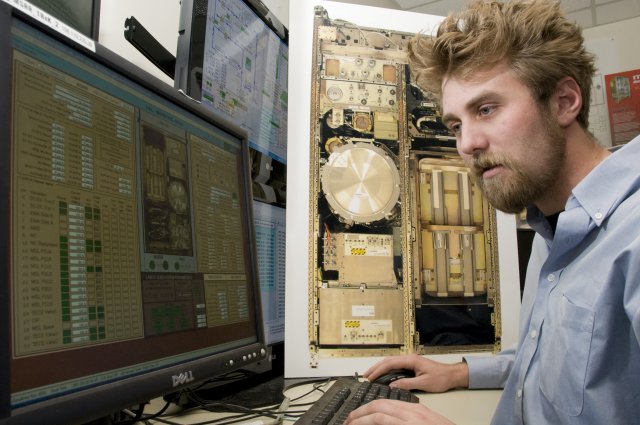
I was offered the opportunity to help coordinate of two solidification experiments onboard the International Space Station as part of my masters research. (All photos courtesy NASA)
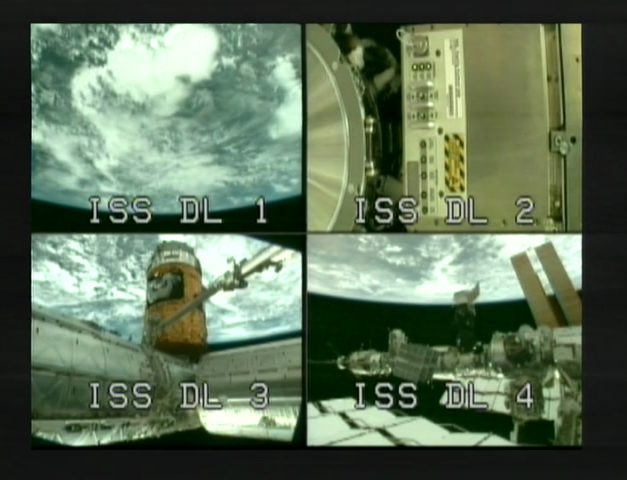
The experiments are a collaboration between American and European scientists (MICAST and CETSOL) and all experiments take place on the Materials Science Research Rack (MSRR) part of the Materials Science Lab (MSL)
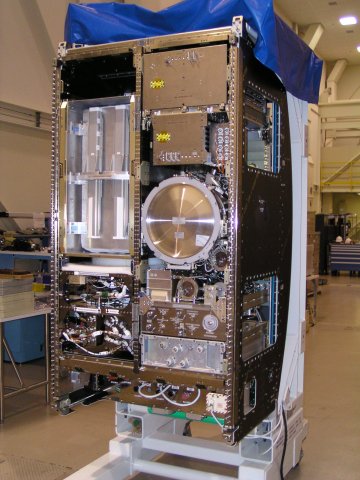
The experiment itself consists of an aluminum alloy sample which is directionally solidified under carefully controlled conditions. The focus of the research has nothing to do with developing fantastic materials for space age applications, it fact it is quite the opposite. The alloy in study is an Aluminum 7% Silicon alloy, much more similar to the material you would find in your engine block than something on a space shuttle. Density driven flow arises in hundreds of engineering situations, but in solidification it is extremely important. Like in most materials, changes in temperature lead to changes in density. Changes in density of a liquid lead to flow in the liquid commonly called convection, a gravity driven phenomenon. In something simple like a pot of boiling water watching your maccaroni noodles swirl around, this is largely inconsequential, but in the solidification of metal, the movement of liquid carries heat and alloy components and can fundamentally change the solidification process. These currents play a large, and poorly understood, role in the introduction of defects and resulting material properties of the solidified metal. The absense of gravity that the ISS experiment allows us to develop metallic microstructures in the absense of this flow, better understand the forces and phenemenon at work, and ideally help improve materials processing right here on Earth.
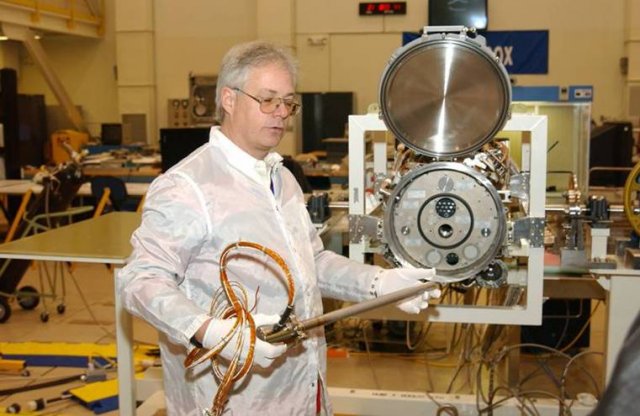
Coming back to the experiment, the sample itself is about the size of a drinking straw (9x255mm), and is encased in a alumina and tantalum casing collectively referred to as the sample cartridge assembly (SCA).
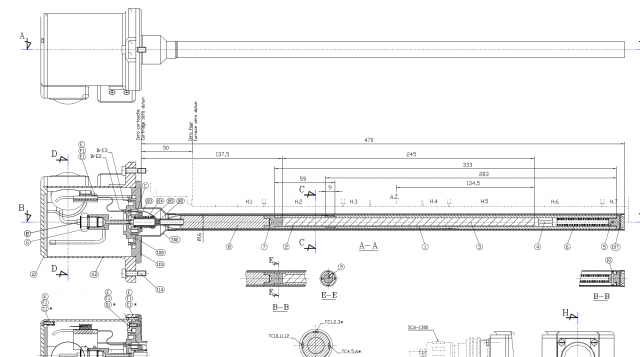
This assembly is housed in a vacuum sealed stainless steel housing called the sample protection container (SPC), or as the astronauts call them “Toilet Plungers.”
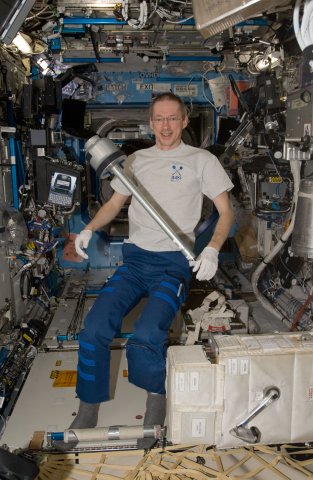
About a day before the sample is processed, it is removed from its container.
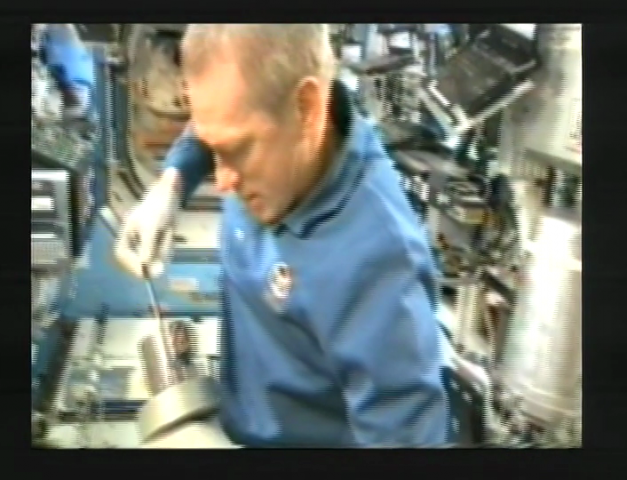
Then it is mounted in the low gradient furnace (LGF).
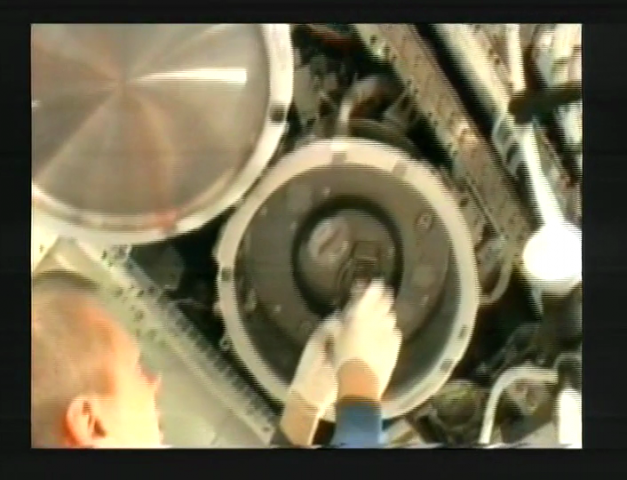
The cartridge is screwed into place, and the entire assembly is closed up. The furnace chamber is the evacuated and held at a high vacuum for the majority of the day to insure that the sample and chamber are completely degassed and as a “leak check.”
The next part is the segment that I spent roughly the last 1.5 years of my life planning, modeling, and generally stressing out about. Progressive furnace heaters are slowly turned up to specified temperatures, and the sample is slowly inserted into the hot-zone of the furnace. After the sample reached the deepest part of the furnace, it was held for some time while the PID controllers equilibrate the temperatures. After that time passed, the sample was slowly withdrawn for a fraction of its length at a low speed (fractions of a millimeter per second) and near the middle the rate was increased dramatically and the remainder was extracted until solidification was completed.
Conceptually, this is pretty simple: heat, melt, solidify, and cool right? There are a lot of finer details that I will spare you, but basically the objectives of our research were somewhat at odds with the design of the furnace, so I spent quite a bit of time staring at a glowing rectangle using modeling and simulation to give us the answers we needed regarding the physics of the experiment.